Annual Forum
The region’s senior decision-makers meet to examine the commercial, policy and investment choices shaping a resilient future.
Driving Climate and Economic Resilience for the MENA Region
About SFME
Sustainability Forum Middle East brings business leaders, policymakers, investors and sustainability experts together to accelerate practical climate action and economic resilience across MENA.
Launched in the Kingdom of Bahrain in 2022, SFME connects high-level dialogue with programmes designed to move ideas into implementation.
Our year-round platform
The region’s senior decision-makers meet to examine the commercial, policy and investment choices shaping a resilient future.
Focused conversations across MENA that surface practical solutions, market insight and cross-sector collaboration.
Applied learning with leading knowledge partners, built around the capabilities businesses need to act.
A forward-looking programme connecting emerging leaders with expertise, tools and a regional network.
What we cover
The agenda shaping MENA’s next economy. SFME examines the priorities influencing the region’s transition.
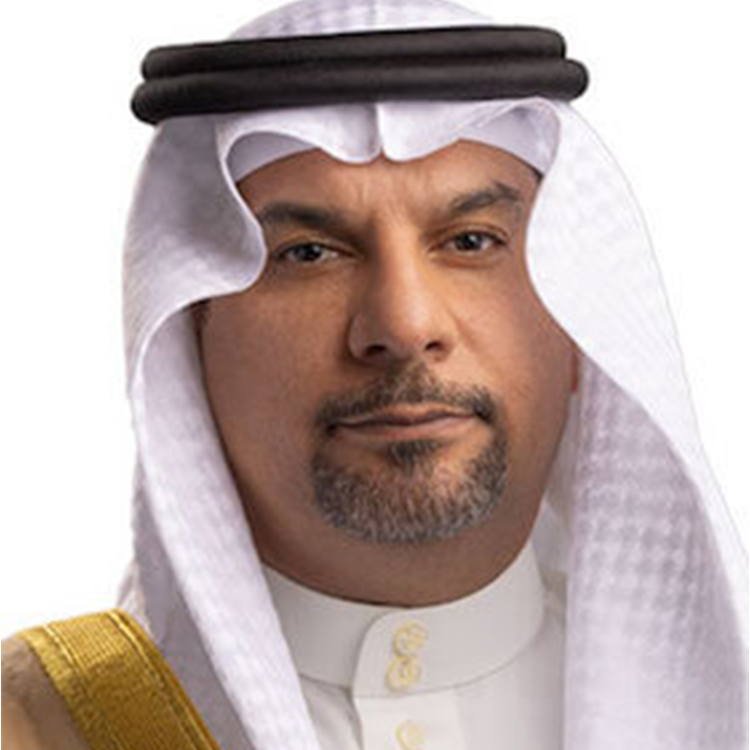
Minister of Oil and Environment
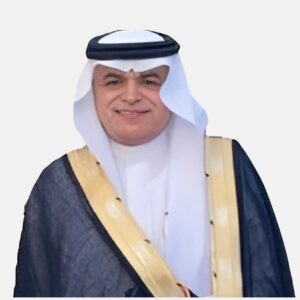
Special Envoy for Climate Change Affairs
5th Edition
A programme designed to move from insight to implementation.
Senior regional and international voices set out the leadership choices that matter now.
Government, business, finance, energy and technology leaders examine the systems, policies and partnerships required for delivery.
Practical learning helps organisations translate commitments into credible action.
Curated networking creates space for partnerships and regional collaboration.
Manama, Bahrain
Senior government leaders discuss how regional economies are accelerating economic diversification, attracting investment and creating new opportunities for growth, with sustainability as a key driver. Drawing on regional experience, the discussion will examine how governments are translating ambition into implementation, adapting strategies to changing economic, technological, geopolitical and trade realities, and maintaining momentum on competitiveness, diversification and long-term transformation.
Business leaders explore how sustainability has evolved from a corporate responsibility agenda into a strategic driver of business performance, creating value through innovation, operational efficiency, cost optimisation, new revenue opportunities and more resilient business models. Drawing on their own experiences and measurable results, panelists will discuss how embedding sustainability into core business strategy has strengthened long-term competitiveness, created stakeholder value and opened new opportunities for growth, innovation and business transformation within their organisations and across their sectors.
Senior policymakers, diplomats and international organisations examine how stronger international partnerships can bridge regional priorities with the evolving global action agenda. Bringing together perspectives from the GCC and key partner regions, the discussion will explore how policy alignment, regulatory developments, trade frameworks and cross-border collaboration are shaping investment, competitiveness and economic opportunity, while ensuring regional priorities are reflected in global decision-making.
As governments and businesses accelerate economic transformation, mobilising sustainable finance has become essential to delivering investment at scale. This session will explore how governments, multilateral institutions, commercial banks, sovereign wealth funds and private investors can work together to de-risk investment, strengthen bankability and scale capital across transition and adaptation priorities, while addressing physical climate risk and demonstrating credible deployment and financial returns.
Energy leaders explore how the evolving energy mix – spanning conventional energy, renewables, electrification, grid modernisation, energy efficiency and emerging technologies such as SMRs – can strengthen energy security, affordability and competitiveness while supporting decarbonisation. The discussion will examine how resilient, efficient and future-ready energy systems can meet the region’s continued growth and industrial expansion, including rising demand from AI and data centres, while navigating critical-mineral, infrastructure and system-efficiency constraints.
Technology leaders, investors and innovators explore where artificial intelligence can deliver the greatest impact in accelerating climate and sustainability solutions across industries. The discussion will examine practical applications including energy efficiency, data and reporting, how businesses can accelerate responsible adoption at scale, and what is needed to attract investment and commercialise solutions – while addressing AI’s own energy, water and infrastructure footprint and the importance of high-quality data and human expertise.
As businesses increasingly recognise nature as a strategic asset rather than an environmental consideration, this session explores how natural capital can be valued and integrated into governance, investment and corporate decision-making. Drawing on practical regional and international examples, panelists will examine how ecosystem services and nature-related value can be translated into credible financial and business terms, strengthening resilience, informing investment and risk decisions, and creating long-term economic value.
Business and policy leaders explore how targeted localisation can reduce carbon intensity, strengthen business continuity and build more competitive regional industries. The discussion will examine how localisation should be defined, measured and implemented to create genuine local value – including jobs, capabilities and economic contribution – while improving operational efficiency and addressing vulnerabilities exposed by recent geopolitical disruption. Speakers will also consider where localisation delivers the greatest strategic benefit, how it can be balanced with global supply networks, and the role of government, industry and entrepreneurs in building stronger regional capabilities.
Industry leaders examine how circular economy models are moving beyond waste management to reshape product design, production, materials use, consumption and industrial value creation across the GCC. The discussion will explore practical mechanisms including reuse, recovery, reverse logistics, buyback and take-back schemes, as well as remediation that returns contaminated materials or land to productive use. Speakers will consider how regionally relevant circular models can reduce waste and emissions, improve resource productivity, create new markets and support more efficient, competitive industries.
Manama, Bahrain
Speaker announcements will appear here, with profiles, session details and links to the programme.
Past Editions
Advancing Alignment, Innovation, and Implementation for Energy and Climate Transformation.
Explore Edition →Mobilizing Action and Investment for Climate and Energy Resilience.
Explore Edition →Achieving Net Zero: Pathways to Accelerating Implementation.
Explore Edition →Business Transition to Net Zero: The Path Towards a Successful Low-Carbon Future.
Explore Edition →What to expect
Who attends
Focused dialogue. Regional impact.
Accelerating energy efficiency delivery.
Details →Building sustainability strategies that withstand disruption.
Details →Strengthening regional cooperation under pressure.
Details →Scaling AI for measurable sustainability outcomes.
Details →Scaling a diversified and resilient energy future.
Details →Putting marine ecosystems at the centre of resilience.
Details →Turning transition into economic opportunity.
Details →Designing destinations that restore nature.
Details →Accelerating the shift to electric mobility.
Details →Mobilising transition capital at scale.
Details →Understanding the role and potential of carbon markets.
Details →Transforming how people and goods move across MENA.
Details →Advisory Committee
Central Cluster Head
The National Water Company - Saudi Arabia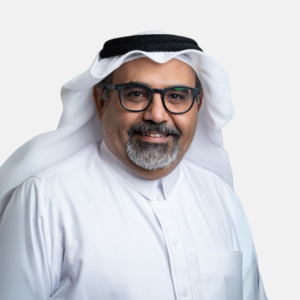
Executive Director, Sustainability & CSR
ACWA Power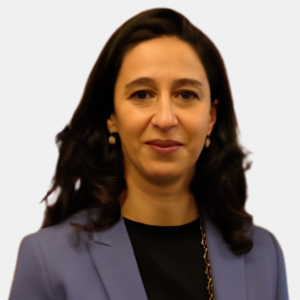
Resident Representative
UNDP Bahrain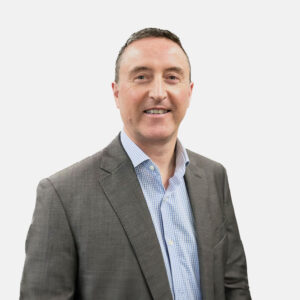
Chief Sustainability Officer
Bank ABC
Partner
Solve Strategies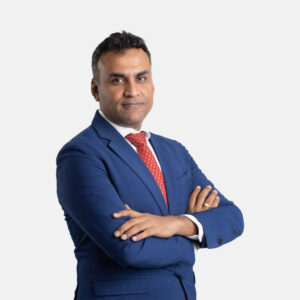
Head of Clients & Markets
KPMG in Bahrain
Executive Director, Sustainability
Red Sea Global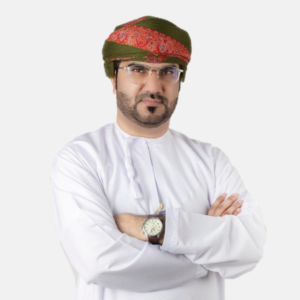
Director General of Climate Change
Environment Authority, Sultanate of Oman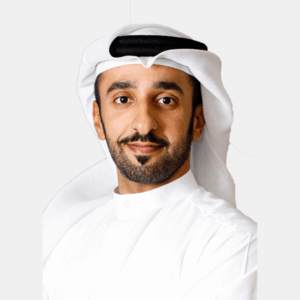
Vice President - Health & Environment
Bapco Refining
Managing Director
FinMark Communications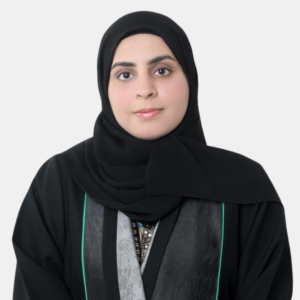
Director of Climate Change and Sustainable Development
Supreme Council for Environment - Kingdom of Bahrain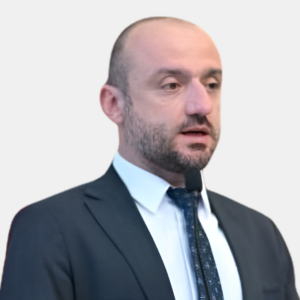
Climate Change ExpertDirectorate of Climate Change Department of Carbon Pricing
Ministry of Environment Urbanization and Climate Change - Republic of Türkiye
Corporate Sustainability, Director
AramcoPartners


























Latest updates
Sustainability Forum Middle East (SFME) today hosted an exclusive networking reception at The Legacy Club, Bahrain Financial Harbour, bringing together more than 80 senior business leaders,…
Read more →Sustainability Forum Middle East (SFME), in partnership with Tabreed Bahrain and Boston Consulting Group (BCG), today hosted a high-level roundtable on “Accelerating Energy Efficiency Delivery under…
Read more →Sustainability Forum Middle East (SFME), in partnership with Tabreed Bahrain and Boston Consulting Group (BCG), today announced an exciting line up of high-level speakers taking part…
Read more →